High Flyers - SUAS 2025

Our Progress

Follow our journey as we develop and refine our SUAS competition project. Click on each post to read more.

30.04.2025 - Testing Object detection on Jetson

We took our drone to the local fields to conduct real-world testing of the YOLO object detection model, evaluating its performance in an outdoor environment.
This test was aimed at simulating a more practical use case and assessing how well the model detects objects in different lighting conditions and backgrounds.
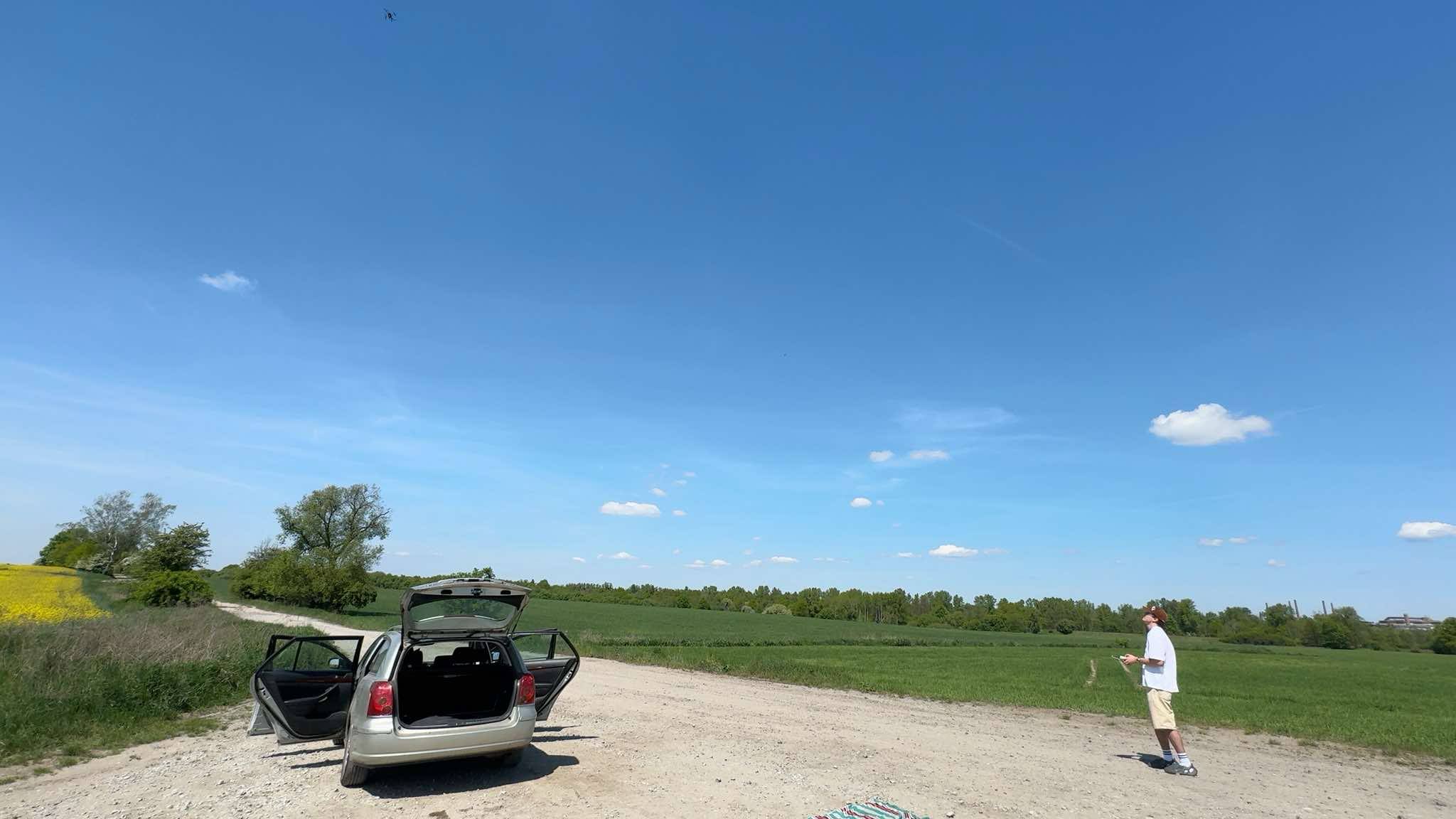
Jetson Test

The outcome wasn’t bad, but we realized there’s still room for improvement.
Some tuning of the object detection algorithm is needed to enhance its accuracy and robustness in dynamic environments like this one.
We will continue refining the system to ensure optimal performance during future trials.
25.04.2025 - Mindstorming the parachute solution

As per the rules, the beacon's fall must be slowed down with some form of retardant mechanism.
To address this, we decided to incorporate a parachute to decelerate the beacon's descent.
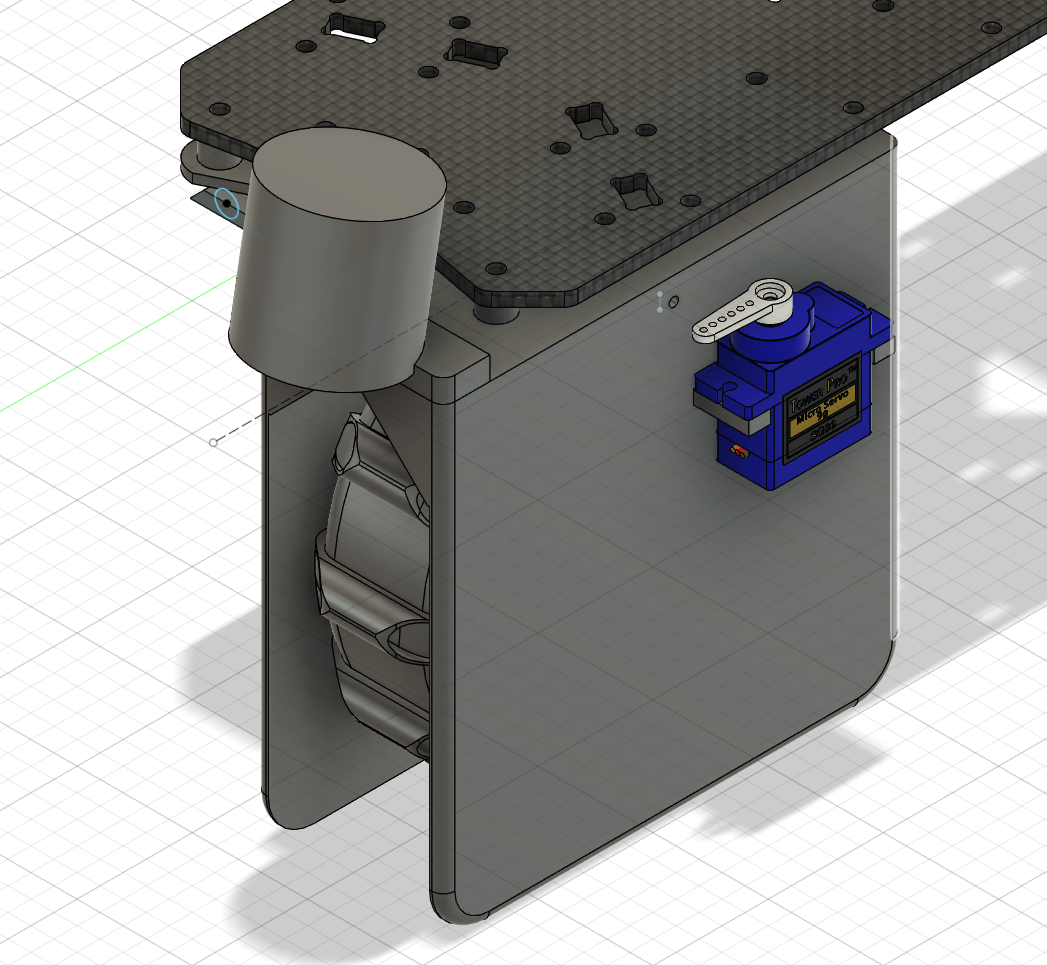
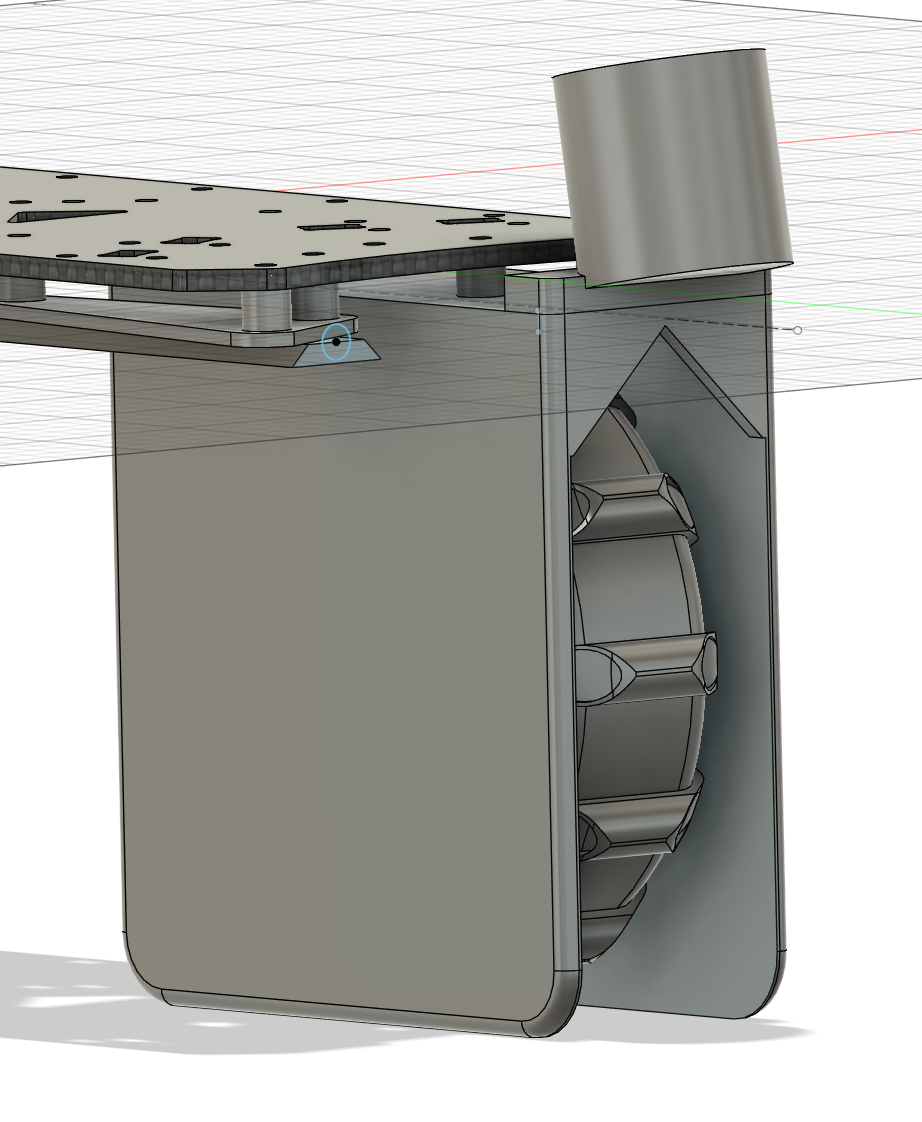
We brainstormed several ideas, and ultimately chose a design where the parachute is stored in a small cylinder placed at the back of the drone.
The parachute is connected to the beacon by a string. Upon the release of the beacon, the string will gain some speed, pulling the parachute out of the cylinder to slow its fall.

Cilinder

This is the concept we are moving forward with.
Initially, we explored using a plastic trash bag as the parachute, which was a quick and easy solution, but we soon realized it wasn't the most effective.
Currently, we are still exploring other options to ensure the parachute mechanism works as efficiently as possible.

21.04.2025 - In lab tests of software for object detection and classification

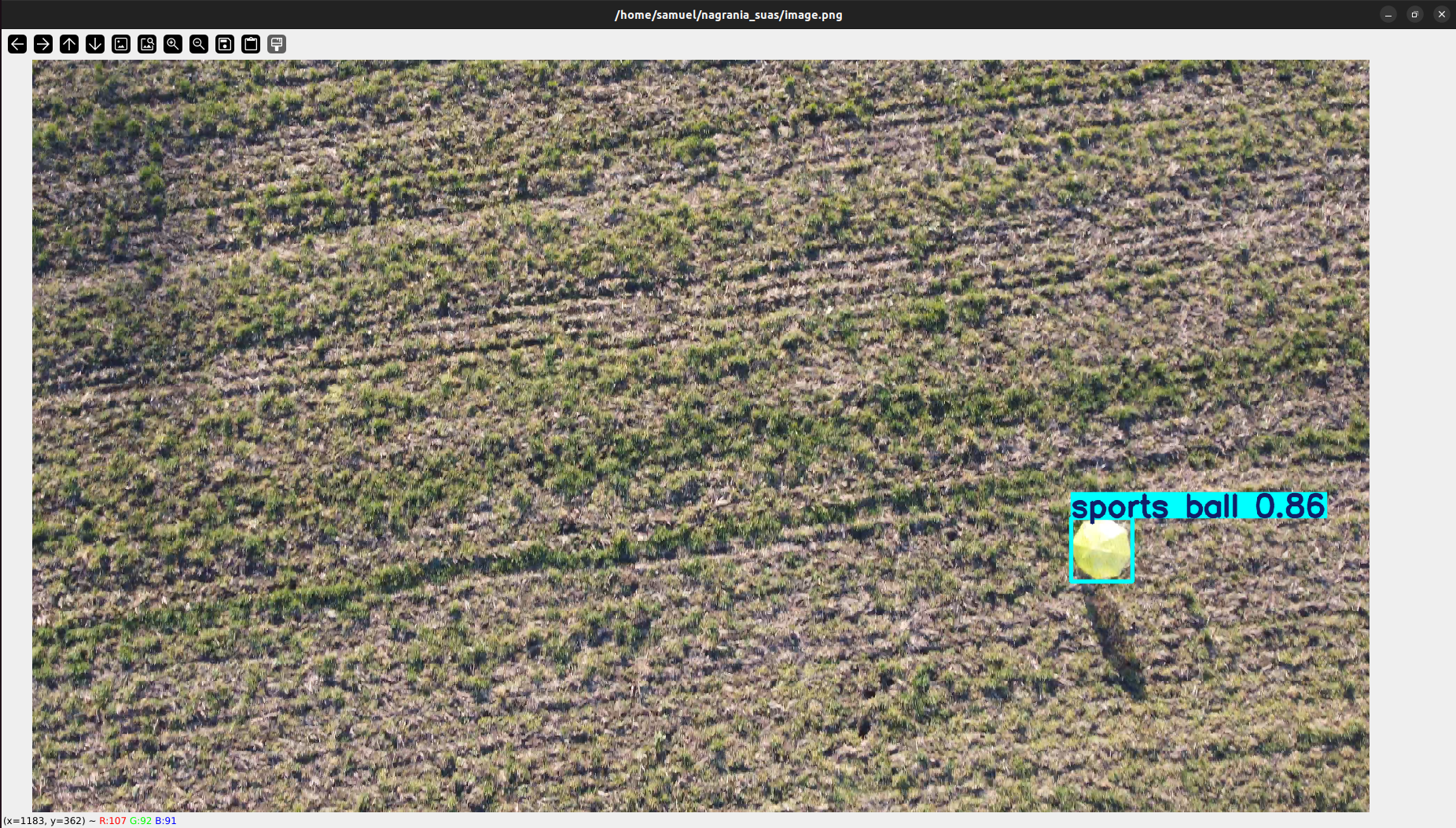
As part of our task to develop object detection and classification capabilities, we initiated software testing. While we were unable to gather all the required objects for training a YOLO model from scratch, we opted to use a pre-trained model to meet our needs.

YOLO Model

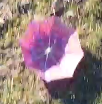
In the image above, the object detected is an umbrella, but the YOLO model mistakenly classifies it as a sports ball. Despite the incorrect classification, the model performs well in detecting objects on the ground.
We used this model as a cropping tool: by taking the bounding box of the detected object, we can crop the image to focus on the object of interest.

Cropped Image

After cropping, we leveraged a large language model (LLM) running locally on the Jetson to perform the final classification.
The LLM successfully identified the object as a colorful umbrella.
This approach allows us to utilize a single model for a wide range of objects, providing flexibility in classification tasks.

LLM Model

The reasoning and final answer from the LLM demonstrate its capability to correctly classify the object, which is a key advantage of using this method in our system.

08.04.2025 - Proof of Flight approved

Today marks a significant milestone in our journey.
We successfully received approval for our proof of flight video, a crucial step that qualified us for the upcoming on-site event.
This achievement reflects the hard work, dedication, and precision that went into preparing our drone for this challenge.


With the proof of flight now behind us, we are excited to take the next steps toward demonstrating the capabilities of our system in a live event.

01.04.2025 - Designing the drop module

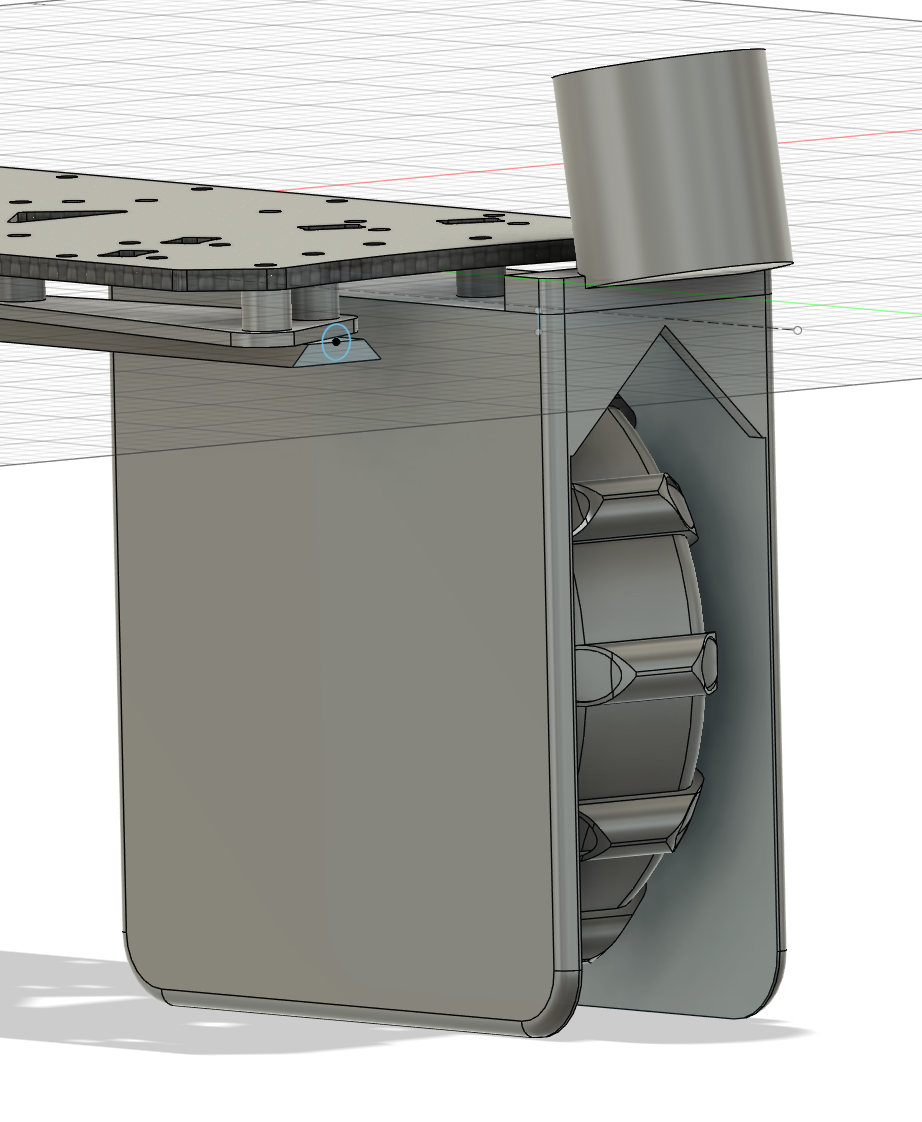
We have initiated the design process for the drop module, a crucial component of the system.
The module is a simple yet effective mechanism that will release the beacon when the drone reaches the correct position.
Focused on lightweight and user-friendly functionality, the module has been designed using CAD software, and we are now in the process of 3D printing the prototype.

Drop module Drop module

The core mechanism of the module utilizes a servo motor to control the release of the beacon.
The servo is powered and controlled by an ESP32, which is integrated with the Jetson computer onboard the drone.
This allows for seamless control and accurate activation of the drop mechanism.


We are excited to see this essential feature coming to life and will continue to monitor its performance throughout the testing phases.

25.03.2025 - Testing the drone before proof of flight

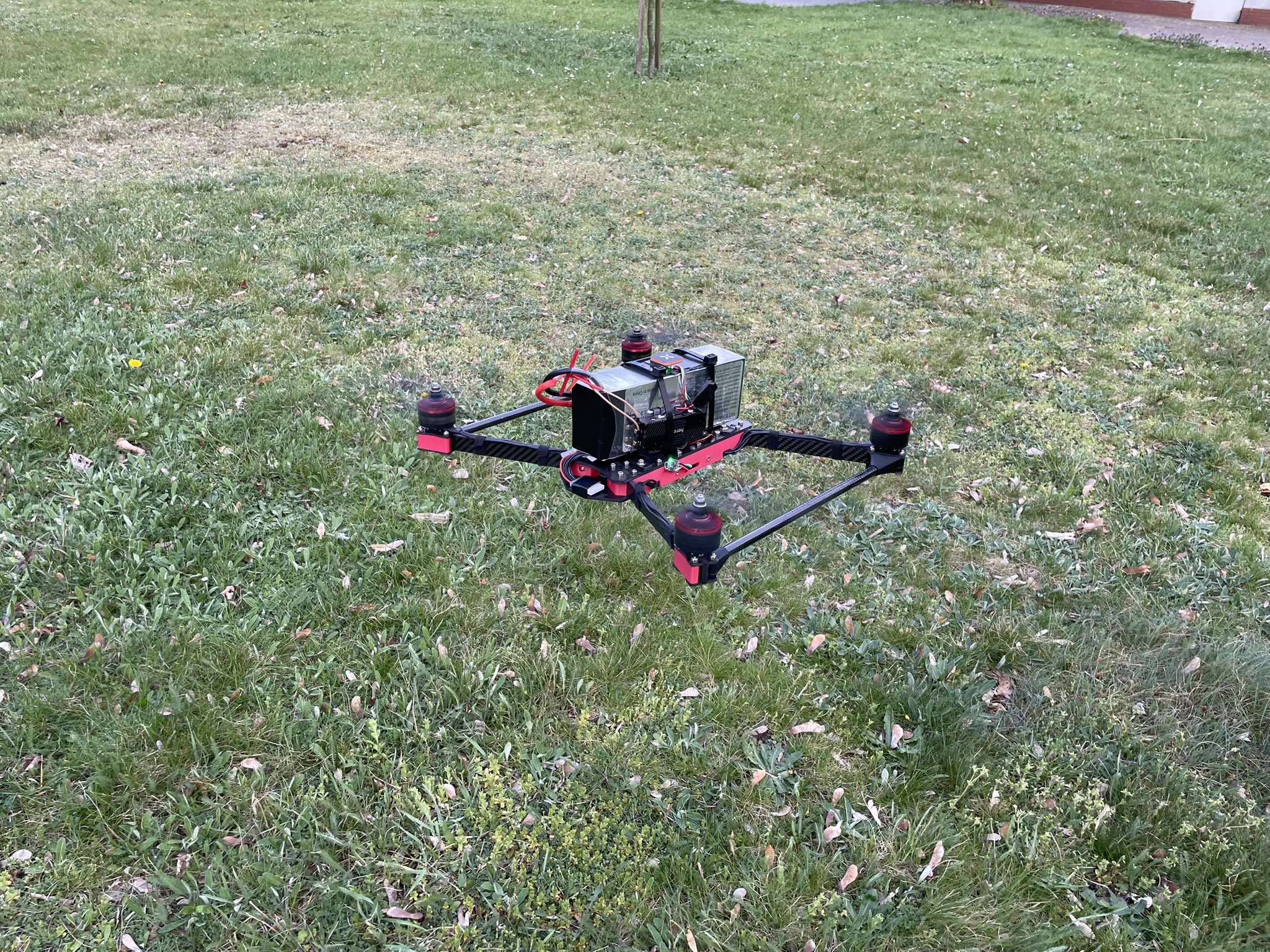
After a significant period of CAD design and development, we reached a crucial milestone: the drone is now stable and ready for testing.
The assembly process involved integrating 3D-printed components alongside carbon fiber parts, such as the arms, ensuring both durability and lightweight performance.

Drone

The next step involved equipping the drone with a Jetson computer, enhancing its processing power and allowing for real-time decision-making capabilities during flight.
This test serves as an essential phase in our journey to ensure that all systems function properly before we proceed with the proof of flight phase.


Stay tuned for more updates as we move closer to the flight trials.